BPC-157 Research: Cytoprotection, Angiogenesis & Tissue Signaling
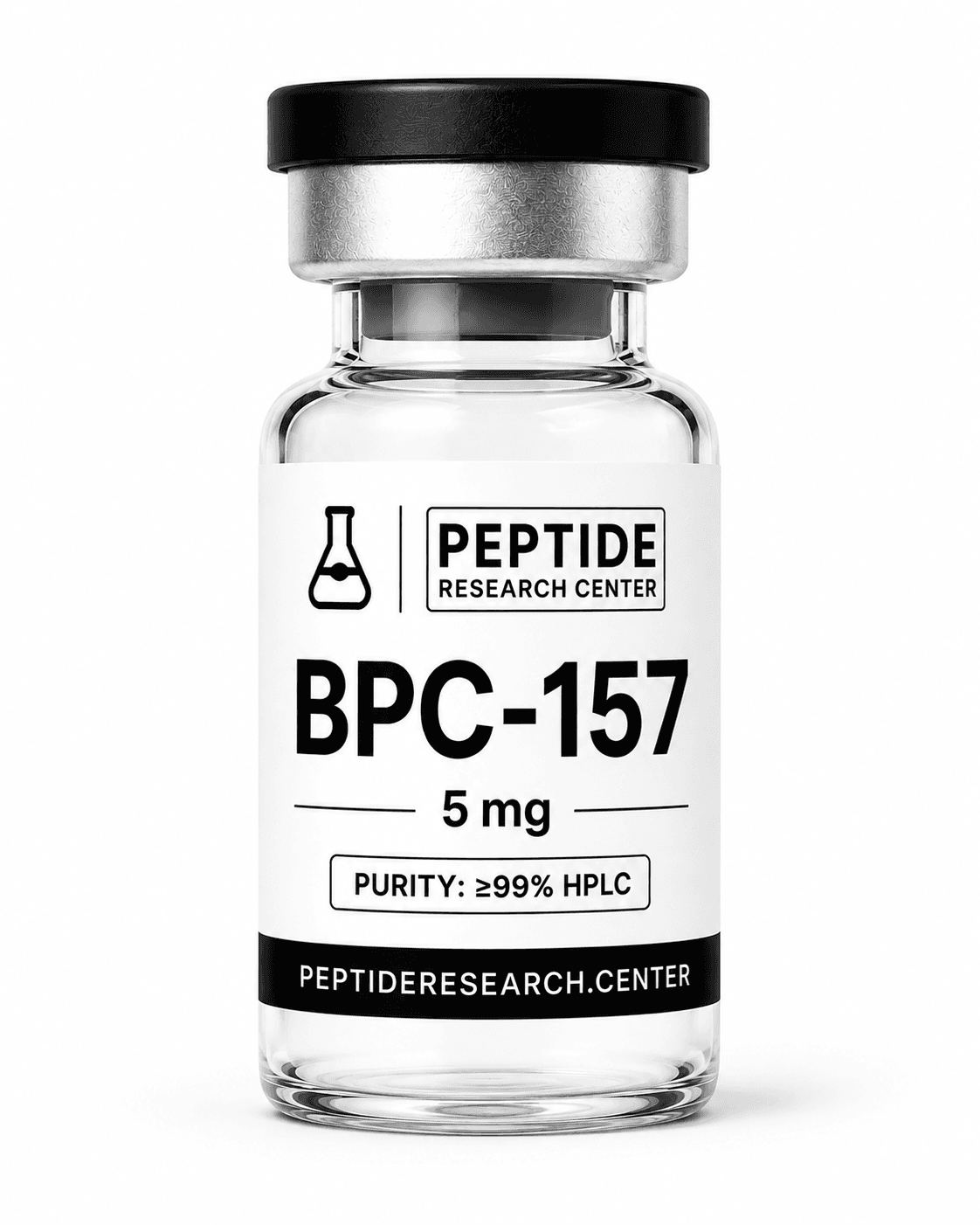
BPC-157 (“body protection compound-157”) is a synthetic 15–amino-acid peptide corresponding to a partial sequence of a protein found in human gastric juice. It's unusual among research peptides for two reasons: it's reportedly very stable — including in gastric acid — and the literature describes broad, pleiotropic activity rather than a single receptor target. That breadth is why it appears across so many preclinical models. This is an educational summary of third-party research for laboratory reference only; no human or veterinary use is described.
Gastrointestinal cytoprotection
The oldest and largest body of BPC-157 work is gastrointestinal. In rodent models of gastric and intestinal lesions, researchers report preservation of mucosal integrity and accelerated closure of experimentally induced ulcers and fistulas, framed in terms of the nitric-oxide system and Robert's “cytoprotection” biology (Sikirić et al., Gut Liver, 2020). [1] This fits the peptide's origin as a gastric-juice–derived sequence.
Angiogenesis and the VEGFR2 pathway
A recurring in-vitro theme is angiogenesis — new blood-vessel formation. Mechanistic work associates BPC-157 with activation and up-regulation of VEGF receptor-2 (VEGFR2) and downstream nitric-oxide signalling, alongside endothelial-cell proliferation and migration (Hsieh et al., J Mol Med, 2017). [2] In injury models this is often linked to directed vessel outgrowth toward damaged tissue.
Tendon, ligament & soft-tissue models
Because tendons and ligaments are poorly vascularised and slow to repair, they're a frequent subject. Reviews of the musculoskeletal literature describe consistent healing signals across tendon, ligament, bone, and muscle injury models, with proposed mechanisms including promotion of fibroblast outgrowth and growth-factor modulation (Gwyer et al., Cell Tissue Res, 2019). [3]
Primary literature & related
- 1. Sikirić et al. — BPC 157 cytoprotection & organoprotection (Gut Liver, 2020)
- 2. Hsieh et al. — pro-angiogenic BPC157 & VEGFR2 (J Mol Med, 2017)
- 3. Gwyer et al. — BPC 157 & musculoskeletal soft-tissue healing (Cell Tissue Res, 2019)
- BPC-157 product page (full cited research)
- TB-500 profile (studied alongside BPC-157)
Frequently Asked Questions
What does “pentadecapeptide” mean?
It simply means a peptide 15 amino acids long. BPC-157's sequence is GEPPPGKPADDAGLV.
Why is BPC-157 described as “stable”?
Research reports describe it as resistant to degradation in gastric juice, which is one reason it's so widely used as a reference compound in preclinical studies.