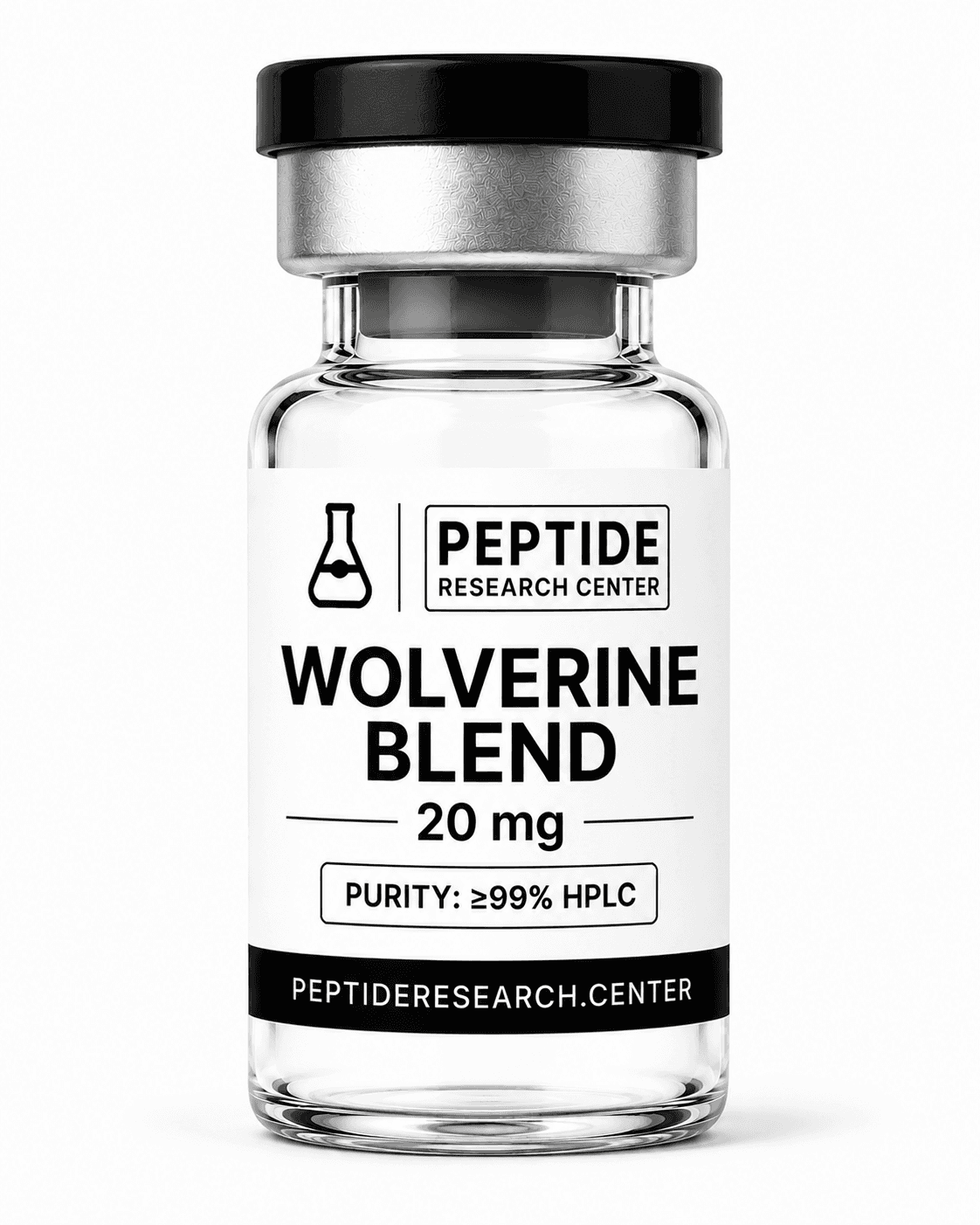
Wolverine Blend
TB-500 + BPC-157 • Combined recovery research
The Wolverine Blend combines TB-500 and BPC-157 in a single vial (20 mg total), a pairing widely used in comparative tissue-recovery research protocols.
One-time payment, no recurring charge. Ships together.
SKU: PRC-WOLV-20
Research Use Only. Not for human or veterinary use. By ordering you confirm you are a qualified researcher.
Purity Verification
HPLC Purity
>99% HPLC
Mass Spec Verified
ESI-MS
Certificate of Analysis
Per batch
Preparation & Handling
Supplied as lyophilized powder. Store unreconstituted vials at -20 °C, protected from light. Reconstitute with bacteriostatic or sterile water; once reconstituted, store at 2–8 °C and use within the validated stability window. Do not freeze-thaw repeatedly. For laboratory research use only.
The Science Behind Wolverine Blend
The Wolverine Blend co-formulates two of the most widely studied recovery-research peptides — BPC-157 and TB-500 (thymosin β4) — in a single vial. The two are frequently paired in preclinical recovery protocols because their reported mechanisms are complementary: BPC-157 is studied for angiogenesis and cytoprotection, while TB-500/Tβ4 is the principal actin-sequestering peptide tied to cell migration. The science is best understood per component, summarised below with citations. Supplied as a co-lyophilized blend for laboratory research only — combination effects in any organism have not been established.
About this blend
The Wolverine Blend co-lyophilizes BPC-157 and TB-500 (thymosin β4) — two peptides each studied independently in tissue-repair and regeneration models. Because this product is a mixture rather than a single molecule, it carries no single CAS number or formula, and its research context is best read alongside the dedicated BPC-157 and TB-500 listings. The summaries here draw on the primary literature for each component.
Rationale for the pairing
Researchers commonly combine these two peptides to probe complementary repair pathways in the same model: BPC-157's reported angiogenic and cytoprotective activity alongside Tβ4's actin-sequestering, cell-migration–oriented profile. [1][4] It is important to note that this rationale is mechanistic and based on the separate single-agent literatures; controlled studies establishing a specific advantage of the combination are limited, and none support human use.
BPC-157 component
BPC-157 is a stable gastric pentadecapeptide studied in preclinical models of musculoskeletal soft-tissue healing, dermal wound repair, and gastrointestinal cytoprotection. [1][2] A recurring proposed mechanism is promotion of angiogenesis through activation and up-regulation of the VEGFR2 pathway in endothelial-cell and chick-embryo models. [3]
TB-500 component
TB-500 corresponds to thymosin β4, the major G-actin-sequestering peptide in mammalian cells and a multifunctional regenerative peptide. [4] By binding monomeric actin it is linked to cytoskeletal remodeling and directional cell migration, [5] and a dedicated literature reports roles in endothelial migration, capillary formation, and vascular remodeling. [6]
Research context
Both components are preclinical research compounds: the great majority of supporting evidence comes from rodent and in-vitro studies, and efficacy has not been established in humans for either peptide individually or in combination. This blend is supplied strictly for in-vitro and laboratory research by qualified professionals.
References
- 1.Gwyer D, Wragg NM, Wilson SL. Gastric pentadecapeptide body protection compound BPC 157 and its role in accelerating musculoskeletal soft tissue healing. Cell Tissue Res. 2019;377(2):153–159.
- 2.Seiwerth S, Milavić M, Vukojević J, et al. Stable gastric pentadecapeptide BPC 157 and wound healing. Front Pharmacol. 2021;12:627533.
- 3.Hsieh MJ, Liu HT, Wang CN, et al. Therapeutic potential of pro-angiogenic BPC157 is associated with VEGFR2 activation and up-regulation. J Mol Med (Berl). 2017;95(3):323–333.
- 4.Goldstein AL, Hannappel E, Sosne G, et al. Thymosin β4: a multi-functional regenerative peptide. Basic properties and clinical applications. Expert Opin Biol Ther. 2012;12(1):37–51.
- 5.Mannherz HG, Hannappel E. The β-thymosins: intracellular and extracellular activities of a versatile actin binding protein family. Cell Motil Cytoskeleton. 2009;66(10):839–851.
- 6.Dubé KN, Smart N. Thymosin β4 and the vasculature: multiple roles in development, repair and protection against disease. Expert Opin Biol Ther. 2018;18(sup1):131–139.
Research Use Only. The information above is provided for educational and reference purposes only and summarizes third-party laboratory and preclinical research. Peptide Research Center products are intended solely for in-vitro and laboratory research by qualified professionals — not for human or veterinary use, diagnosis, or treatment. Nothing here constitutes medical advice or a therapeutic claim.
Facts & Questions
What is the ratio in the blend?
The 20 mg total is a co-formulated TB-500 + BPC-157 blend. Exact per-component mass is printed on the vial and COA.
Related Research Compounds
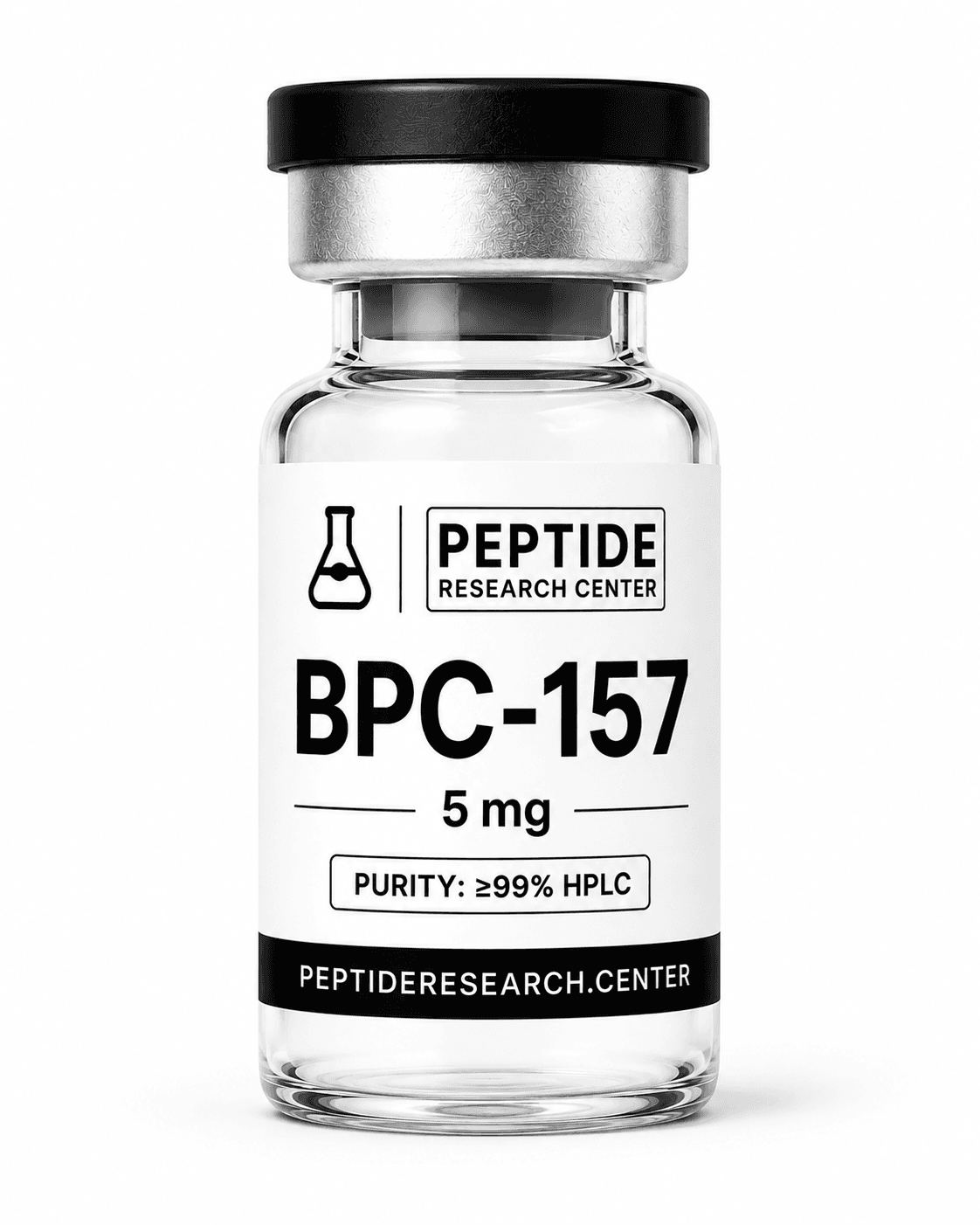 >99% HPLC
BPC-157
Pentadecapeptide • Tissue & gut research
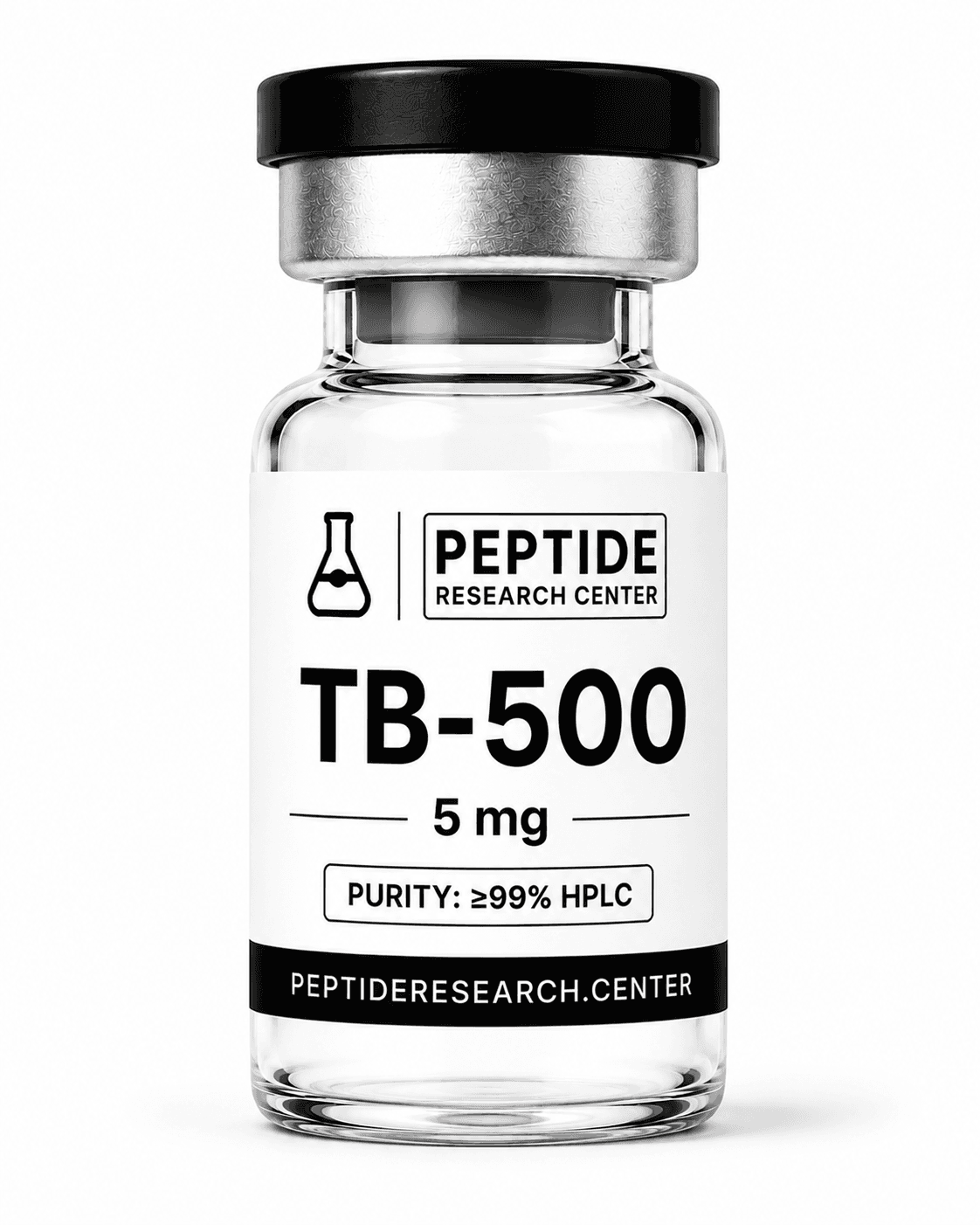 >99% HPLC
TB-500
Thymosin β4 fragment • Recovery research
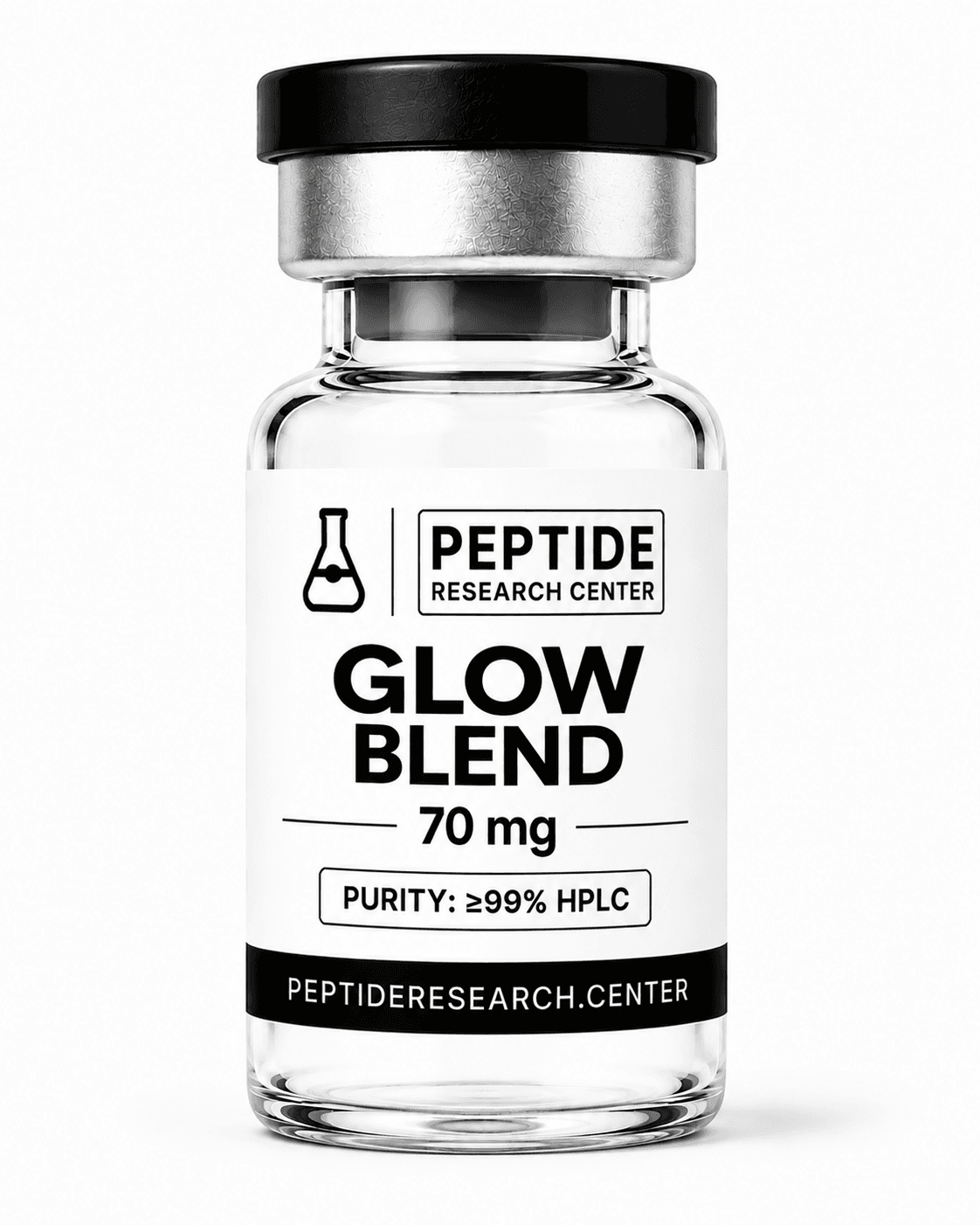 >99% HPLC
Glow Blend
BPC-157 + TB-500 + GHK-Cu • Skin & recovery research