Ipamorelin
Selective GH secretagogue • GH axis research
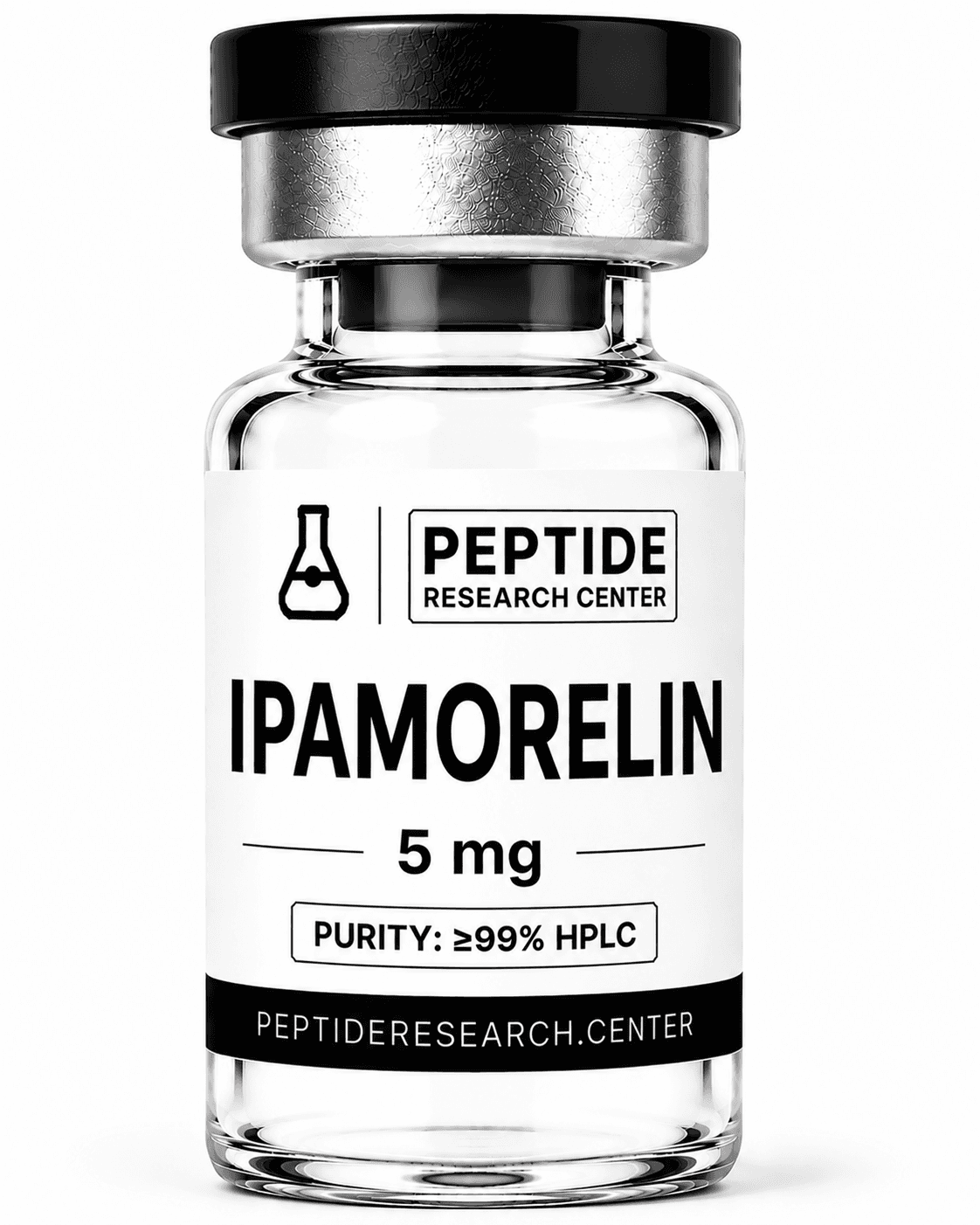
Ipamorelin is a selective growth-hormone secretagogue (ghrelin-receptor agonist) studied in GH-release research models with high selectivity.
SKU: PRC-IPA-5
Research Use Only. Not for human or veterinary use. By ordering you confirm you are a qualified researcher.
Purity Verification
HPLC Purity
>99% HPLC
Mass Spec Verified
ESI-MS
Certificate of Analysis
Per batch
Preparation & Handling
Supplied as lyophilized powder. Store unreconstituted vials at -20 °C, protected from light. Reconstitute with bacteriostatic or sterile water; once reconstituted, store at 2–8 °C and use within the validated stability window. Do not freeze-thaw repeatedly. For laboratory research use only.
The Science Behind Ipamorelin
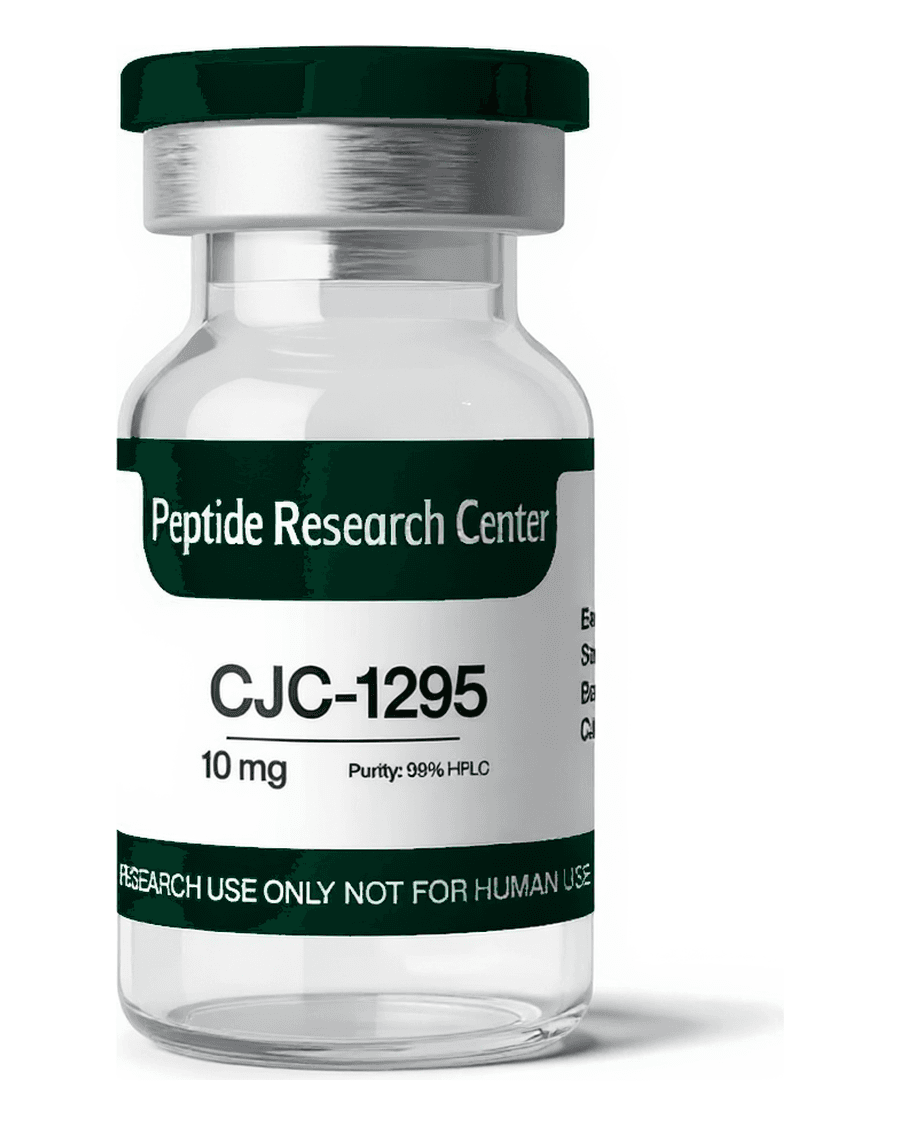
Ipamorelin is a reference GH secretagogue noted in literature for selective GH release with minimal effect on cortisol or prolactin in study models. Often paired with a GHRH analog such as CJC-1295.
Overview & selectivity
Ipamorelin is a synthetic pentapeptide (Aib-His-D-2-Nal-D-Phe-Lys-NH₂) studied as a selective growth hormone secretagogue (GHS) and agonist of the ghrelin / GHS-R1a receptor. In its original characterization it released growth hormone from rat pituitary cells in vitro and in vivo with potency comparable to GHRP-6, yet — unlike earlier GHRPs — did not significantly elevate ACTH or cortisol even at doses far above those needed for GH release. Researchers described it as the first GHRP-receptor agonist with GH-release selectivity similar to GHRH, making it a useful reference tool for studying receptor selectivity. [1]
Mechanism of action
Research models position ipamorelin as an agonist at the GHS-R1a (ghrelin) receptor on pituitary somatotroph cells. The proposed signaling cascade involves phospholipase C and the second messengers IP₃ and DAG, leading to intracellular calcium release and exocytosis of GH-containing vesicles. In one in vitro study, chronic exposure in young female rats was associated with increased somatotroph secretory-granule density and intracellular GH content, suggesting a dynamic effect on the somatotroph population. [2]
Ghrelin-receptor pharmacology
Because ipamorelin is derived from the GHRP series and targets the ghrelin receptor, it is used to probe how growth-hormone-releasing peptides interact with endogenous ghrelin signaling. In rats, GHRP-induced GH release was attenuated by roughly 60–70% after resection of the gastrointestinal tract — where ghrelin is synthesized — supporting the hypothesis that gastric ghrelin may mediate part of the GH-releasing effect of these peptides. [3]
Bone and catabolic-state models
In an adult rat model, ipamorelin administered alongside a glucocorticoid (methylprednisolone) counteracted the glucocorticoid-induced decline in bone formation and muscle strength: the periosteal bone-formation rate increased roughly four-fold versus glucocorticoid treatment alone. The authors attributed the effect to GHS-driven modulation of the GH/IGF-1 axis. [4]
Gastrointestinal motility & appetite
As a ghrelin mimetic, ipamorelin has been examined for effects on gut motility and feeding. In a rodent model of post-operative ileus, repeated dosing accelerated colonic transit and increased fecal output, food intake, and body-weight gain. [5] More recent work in ferrets reported that ipamorelin (and the related agonist anamorelin) reduced cisplatin-induced weight loss, consistent with appetite- and motility-related activity at the ghrelin receptor. [6]
References
- 1.Raun K, Hansen BS, Johansen NL, et al. Ipamorelin, the first selective growth hormone secretagogue. Eur J Endocrinol. 1998;139(5):552–561.
- 2.Jiménez-Reina L, Cañete R, de la Torre MJ, Bernal G. Influence of chronic treatment with the growth hormone secretagogue Ipamorelin in young female rats: somatotroph response in vitro. Histol Histopathol. 2002;17(3):707–714.
- 3.Ahnfelt-Rønne I, Nowak J, Olsen UB. Do growth hormone-releasing peptides act as ghrelin secretagogues? Endocrine. 2001;14(1):133–135.
- 4.Andersen NB, Malmlöf K, Johansen PB, Andreassen TT, Ørtoft G, Oxlund H. The growth hormone secretagogue ipamorelin counteracts glucocorticoid-induced decrease in bone formation of adult rats. Growth Horm IGF Res. 2001;11(5):266–272.
- 5.Venkova K, Mann W, Nelson R, Greenwood-Van Meerveld B. Efficacy of ipamorelin, a novel ghrelin mimetic, in a rodent model of postoperative ileus. J Pharmacol Exp Ther. 2009;329(3):1110–1116.
- 6.Lu Z, Ngan MP, Liu JYH, et al. The growth hormone secretagogue receptor 1a agonists, anamorelin and ipamorelin, inhibit cisplatin-induced weight loss in ferrets. Physiol Behav. 2024;284:114644.
Research Use Only. The information above is provided for educational and reference purposes only and summarizes third-party laboratory and preclinical research. Peptide Research Center products are intended solely for in-vitro and laboratory research by qualified professionals — not for human or veterinary use, diagnosis, or treatment. Nothing here constitutes medical advice or a therapeutic claim.