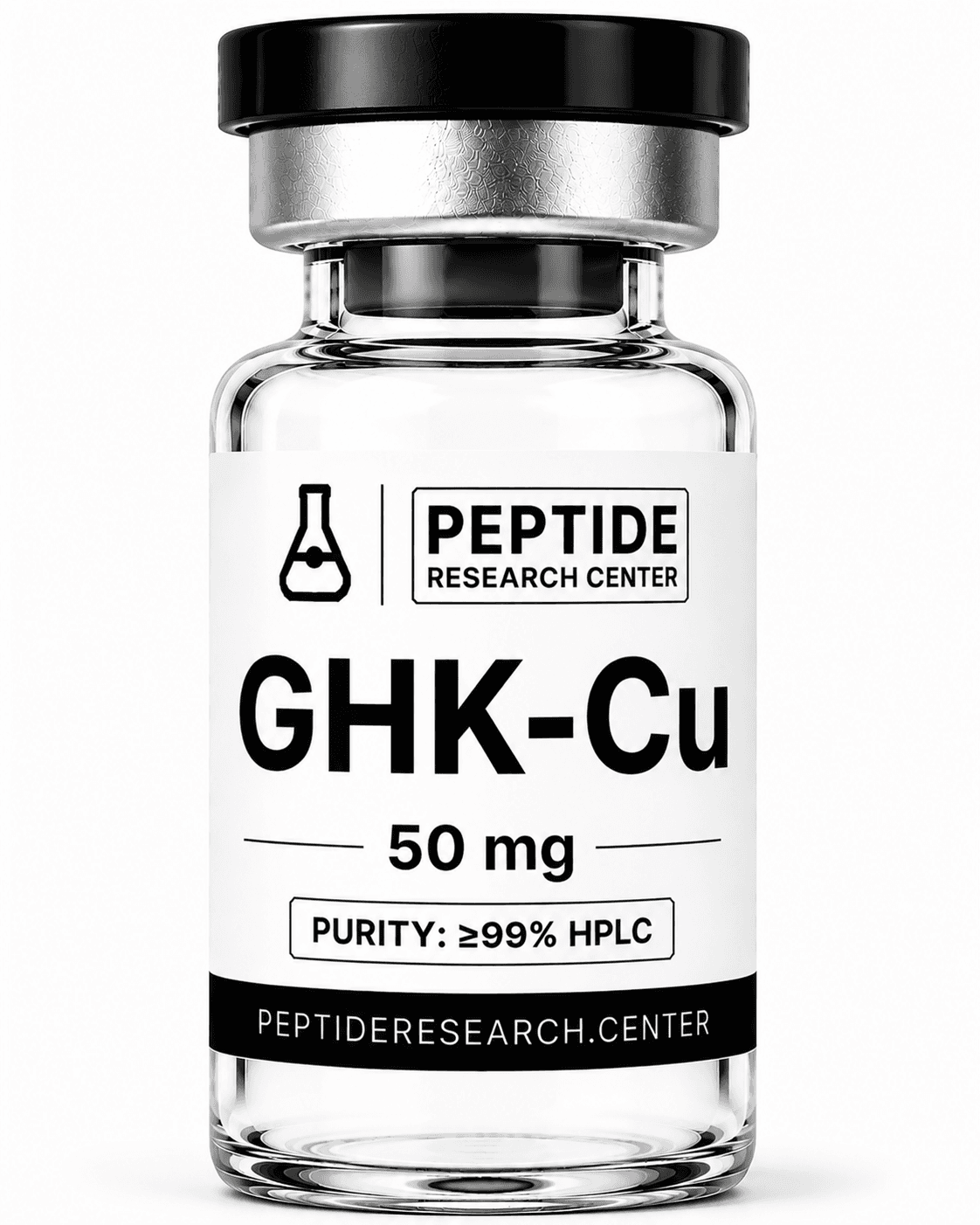
GHK-Cu
Copper tripeptide • Skin & collagen research
GHK-Cu is a naturally occurring copper-binding tripeptide (glycyl-L-histidyl-L-lysine) extensively studied in skin-remodeling and collagen-synthesis research.
One-time payment, no recurring charge. Ships together.
SKU: PRC-GHKCU-50
Research Use Only. Not for human or veterinary use. By ordering you confirm you are a qualified researcher.
Purity Verification
HPLC Purity
>99% HPLC
Mass Spec Verified
ESI-MS
Certificate of Analysis
Per batch
Preparation & Handling
Supplied as lyophilized powder. Store unreconstituted vials at -20 °C, protected from light. Reconstitute with bacteriostatic or sterile water; once reconstituted, store at 2–8 °C and use within the validated stability window. Do not freeze-thaw repeatedly. For laboratory research use only.
The Science Behind GHK-Cu
GHK-Cu is a reference compound in dermal research, including collagen and elastin synthesis models, antioxidant pathways, and wound-healing studies.
Overview
GHK-Cu is a naturally occurring copper-binding tripeptide (glycyl-L-histidyl-L-lysine complexed with copper(II)) found in human plasma, saliva, and urine, with levels that decline with age. It is studied for roles in skin remodeling, wound healing, and antioxidant signaling. [1]
Mechanism: tissue remodeling
GHK has a copper(II) affinity similar to the copper-transport site on albumin and is proposed to deliver copper to cells while modulating expression of genes involved in extracellular-matrix synthesis. Research describes effects on collagen and glycosaminoglycan production and on the resolution of inflammatory and scar-forming processes. [1]
Antioxidant & aging research
Reviews discuss GHK-Cu in the context of oxidative stress, copper homeostasis, and aging-associated gene-expression changes, including proposed implications for skin and cognitive-health research. [2]
Gene-modulating & regenerative research
Beyond collagen synthesis, GHK has been studied as a broad modulator of gene expression. Genome-wide analyses cited in review work report that GHK can shift the expression of large numbers of genes — both up and down — toward patterns associated with tissue repair, including DNA-repair, antioxidant, and anti-inflammatory programmes. [4] This positions it in the literature as a regenerative signalling peptide rather than a single-pathway agent. [1]
Cosmetic formulation research
Because GHK-Cu is widely used topically, formulation studies have examined delivery systems such as liposomal carriers to improve its stability and skin penetration. [3] Such work is concerned with delivery and stability in research and cosmetic contexts rather than systemic administration.
Research-use context
The material supplied here is research-grade and intended solely for in-vitro and laboratory study by qualified professionals. Nothing in the summaries above is a therapeutic or cosmetic-efficacy claim, and the compound is not formulated, dosed, or authorised for use in humans or animals.
References
- 1.Pickart L. The human tri-peptide GHK and tissue remodeling. J Biomater Sci Polym Ed. 2008;19(8):969–988.
- 2.Pickart L, Vasquez-Soltero JM, Margolina A. The human tripeptide GHK-Cu in prevention of oxidative stress and degenerative conditions of aging: implications for cognitive health. Oxid Med Cell Longev. 2012;2012:324832.
- 3.Dymek M, Olechowska K, Hąc-Wydro K, et al. Liposomes as carriers of GHK-Cu tripeptide for cosmetic application. Pharmaceutics. 2023;15(10):2485.
- 4.Pickart L, Vasquez-Soltero JM, Margolina A. GHK peptide as a natural modulator of multiple cellular pathways in skin regeneration. Biomed Res Int. 2015;2015:648108.
Research Use Only. The information above is provided for educational and reference purposes only and summarizes third-party laboratory and preclinical research. Peptide Research Center products are intended solely for in-vitro and laboratory research by qualified professionals — not for human or veterinary use, diagnosis, or treatment. Nothing here constitutes medical advice or a therapeutic claim.