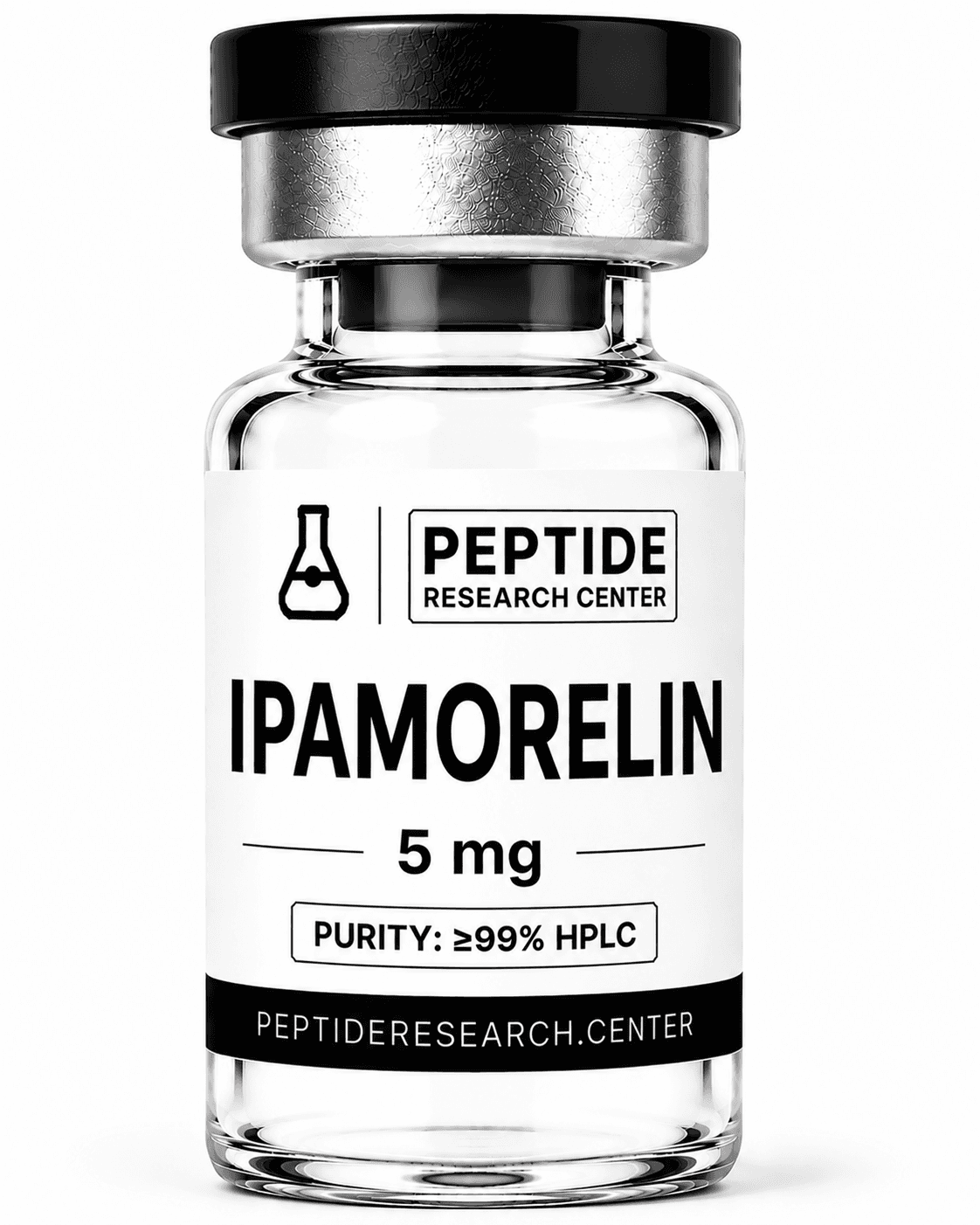
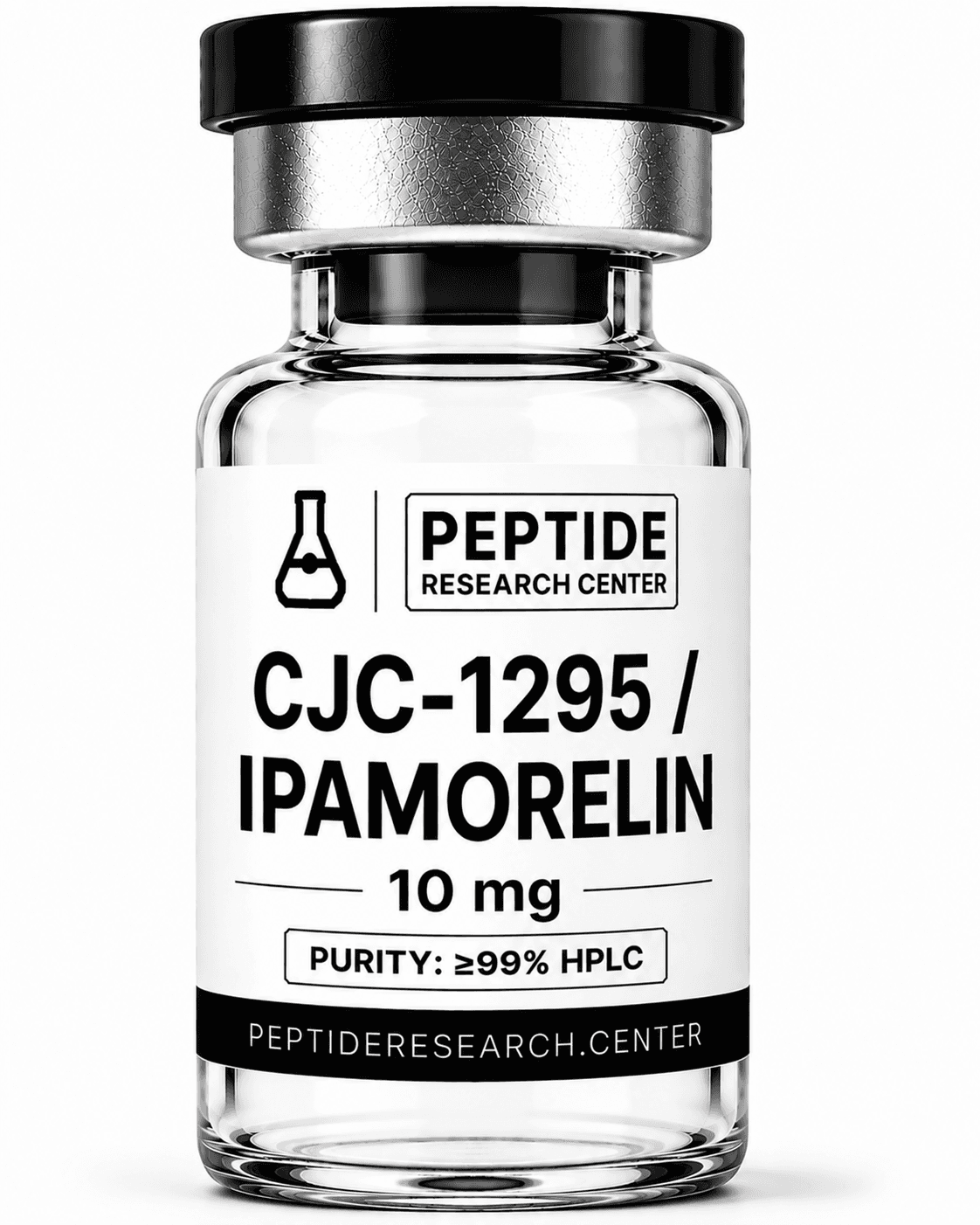
Ipamorelin Research: Selective Ghrelin-Receptor Signaling
Ipamorelin is a small synthetic pentapeptide that acts at the growth-hormone secretagogue receptor (GHS-R1a) — the same receptor the hormone ghrelin binds. It's studied as a “growth-hormone secretagogue”: a compound that prompts the pituitary to release growth hormone. Its claim to fame in the literature is selectivity. Educational research summary only; no human or veterinary use is described.
The “first selective” secretagogue
The foundational paper introduced ipamorelin as the first growth-hormone secretagogue with selectivity for GH release — meaning, in their models, it stimulated growth hormone without the increases in cortisol and prolactin seen with earlier secretagogues (Raun et al., Eur J Endocrinol, 1998). [1] That clean profile is the single most-cited reason researchers reach for it.
A ghrelin mimetic
Because it binds GHS-R1a, ipamorelin is studied as a ghrelin mimetic, and research has examined whether GH-releasing peptides act through ghrelin-receptor pathways (Ahnfelt-Rønne, Nowak & Olsen, Endocrine, 2001). [2] This connects it to a broader literature on appetite and gut-motility signaling that runs through the same receptor.
Bone and tissue models
Beyond GH release itself, animal work has looked at downstream effects — for example, the secretagogue's influence in bone-research models (Andersen et al., Growth Horm IGF Res, 2001). [3] As always, these are controlled preclinical observations.
Primary literature & related
- 1. Raun et al. — Ipamorelin, the first selective GH secretagogue (Eur J Endocrinol, 1998)
- 2. Ahnfelt-Rønne et al. — GH-releasing peptides as ghrelin secretagogues (Endocrine, 2001)
- 3. Andersen et al. — Ipamorelin in bone research (Growth Horm IGF Res, 2001)
- Ipamorelin product page (full cited research)
- CJC-1295 / Ipamorelin blend
Frequently Asked Questions
What does “selective” mean for a secretagogue?
In the founding research, ipamorelin stimulated growth-hormone release without the rises in cortisol and prolactin associated with earlier secretagogues — a comparatively selective effect.