Sermorelin Research: GHRH(1-29) Growth-Hormone Signaling
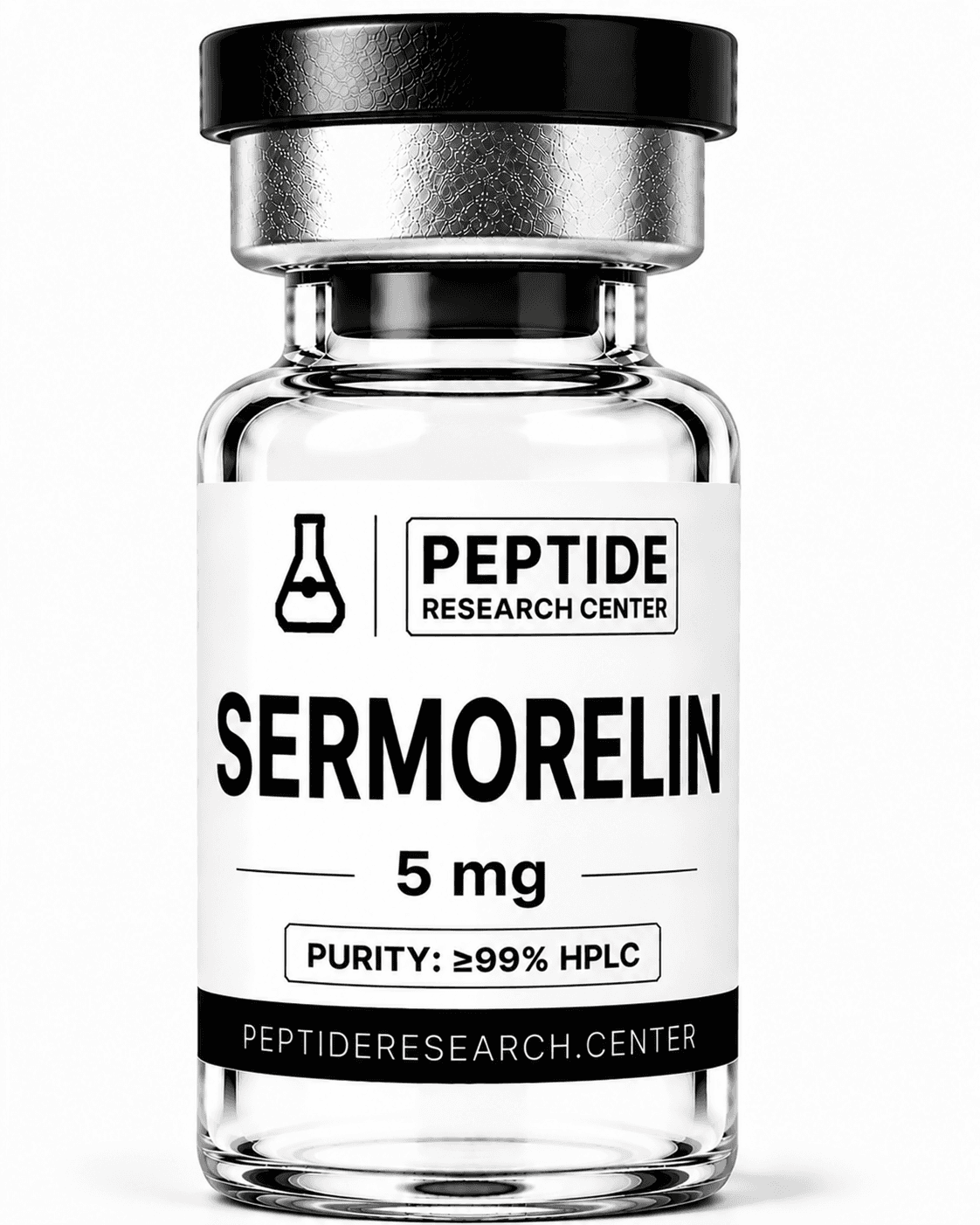
Sermorelin corresponds to the first 29 amino acids of growth-hormone-releasing hormone — GHRH(1-29) — which research established as the shortest fragment retaining the full biological activity of the native hormone. Like other GHRH analogs, it acts upstream of growth hormone. Educational summary for laboratory reference only.
The minimal active fragment
Structure-activity work on human GHRH showed that the 1-29 amidated fragment is the minimal sequence retaining full potency — the basis for sermorelin's design (Cervini et al., J Med Chem, 1998). [1] Working with the shortest active fragment is synthetically convenient and well-characterized.
Pulsatile vs. continuous signaling
A recurring research theme for GHRH(1-29) is how the timing of delivery shapes the growth-hormone axis — comparing continuous versus pulsatile administration in physiology studies (Achermann et al., Clin Endocrinol, 1999). [2] This pulsatility question is central to how secretagogues are studied.
Beyond the GH axis
GHRH(1-29) has also been examined for effects on cellular proliferation and VEGF-related signaling in research models, broadening interest beyond growth-hormone release alone (Stepień et al., Neuropeptides, 2009). [3]
Primary literature & related
- 1. Cervini et al. — hGHRH(1-29)NH2 structure-activity (J Med Chem, 1998)
- 2. Achermann et al. — continuous vs pulsatile GHRH(1-29) (Clin Endocrinol, 1999)
- 3. Stepień et al. — GHRH(1-29) proliferation & VEGF signaling (Neuropeptides, 2009)
- Sermorelin product page (full cited research)
- Tesamorelin profile (related GHRH analog)
Frequently Asked Questions
How is sermorelin related to tesamorelin?
Both are GHRH-based research compounds acting upstream of growth hormone. Sermorelin is the GHRH(1-29) fragment; tesamorelin is a stabilized GHRH analog with a modifying group.