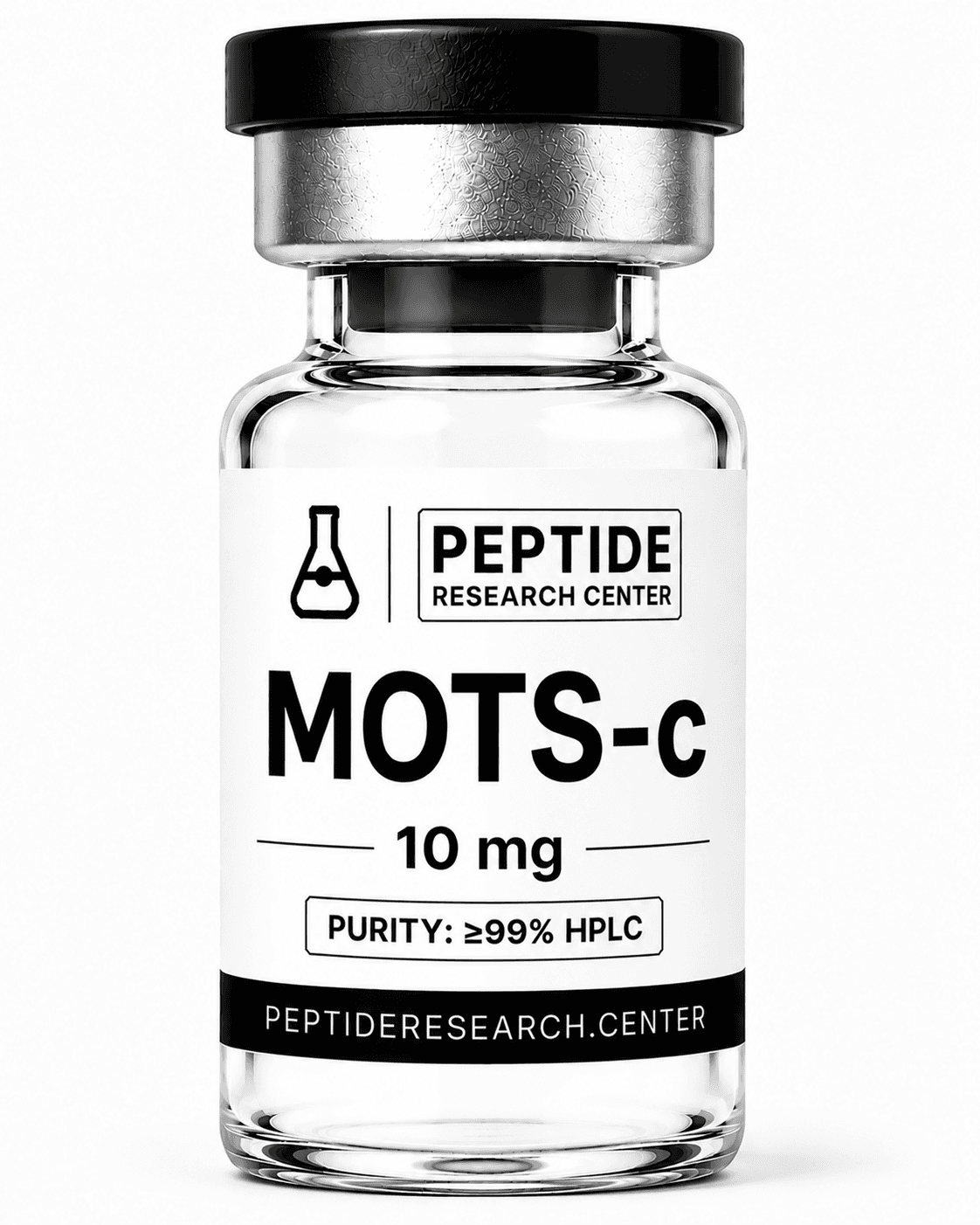
MOTS-c Research: Mitochondrial Signaling & Cellular Energy
MOTS-c is a 16–amino-acid peptide encoded within mitochondrial DNA — a “mitochondrial-derived peptide” (MDP). Unlike most peptides studied from the outside in, MOTS-c emerged from asking what small proteins the mitochondrial genome itself produces. It's studied as a signaling molecule linking mitochondria to whole-cell metabolism. Educational summary for laboratory reference only.
A peptide written in mitochondrial DNA
The foundational paper identifying MOTS-c described it promoting metabolic homeostasis and reducing obesity in animal models, acting in part through the AMPK pathway — a master cellular energy sensor (Lee et al., Cell Metab, 2015). [1] That AMPK link is the through-line for most subsequent metabolic work.
Exercise and age-dependent regulation
Later research framed MOTS-c as exercise-induced and as a regulator of age-dependent physiology, with reported effects on physical capacity in animal models (Reynolds et al., 2021). [2] This is part of why it appears in longevity- and performance-research conversations.
An expanding research literature
Reviews now position MOTS-c as a mitochondrial-derived peptide of broad interest for metabolic research, summarizing its signalling roles and open questions (Zheng, Wei & Wang, Front Endocrinol, 2023). [3]
Primary literature & related
- 1. Lee et al. — MOTS-c promotes metabolic homeostasis via AMPK (Cell Metab, 2015)
- 2. Reynolds et al. — MOTS-c, exercise & age-dependent regulation (2021)
- 3. Zheng et al. — MOTS-c review (Front Endocrinol, 2023)
- MOTS-c product page (full cited research)
- NAD+ profile (related energy-metabolism research)
Preguntas frecuentes
What makes MOTS-c a “mitochondrial-derived peptide”?
It's encoded within mitochondrial DNA itself, not the cell's nuclear genome — a small but distinct class of signaling peptides.