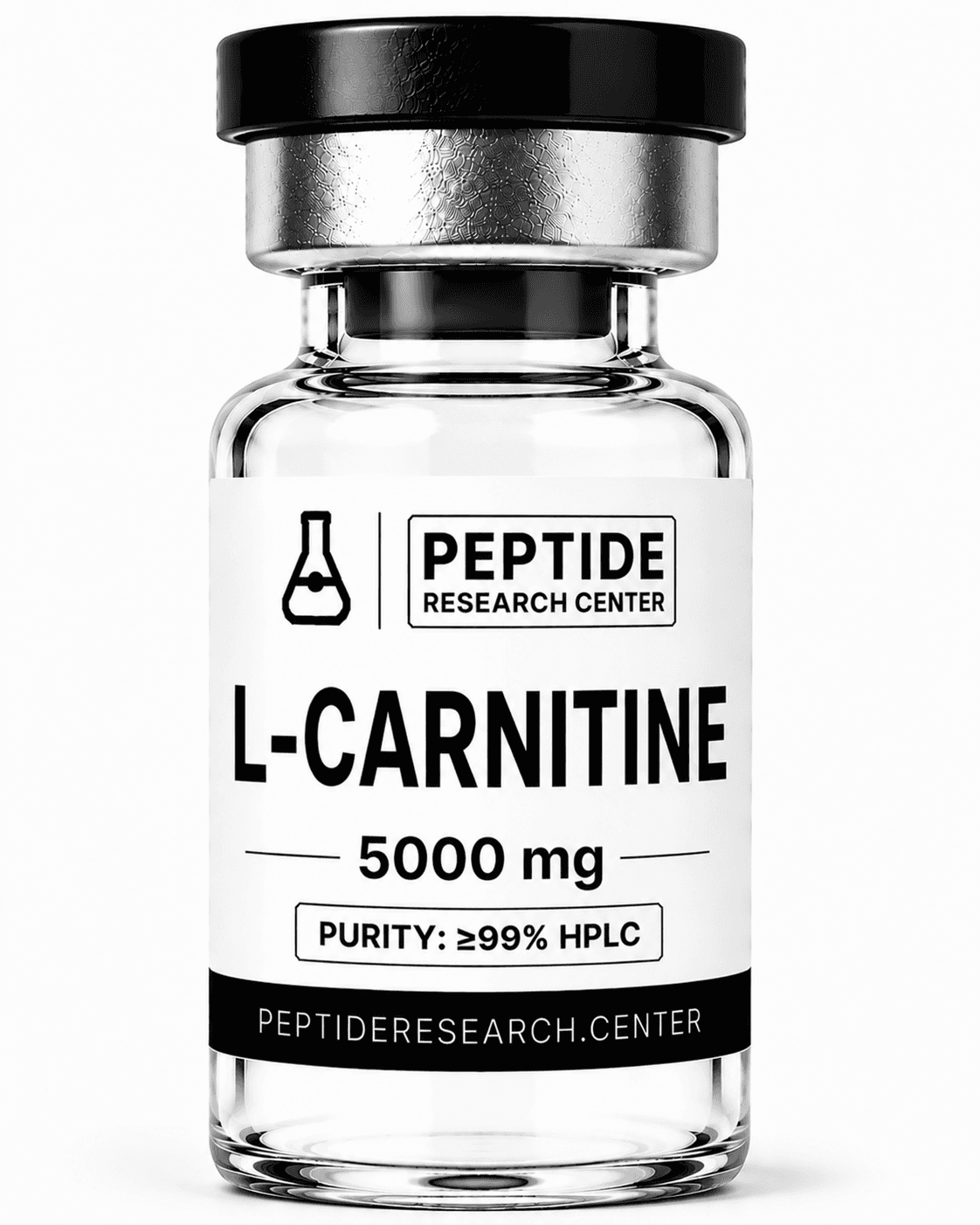
L-Carnitine Research: Fatty-Acid Transport & Energy Metabolism
L-Carnitine isn't a peptide — it's a small amino-acid-derived molecule — but it's a fixture of energy-metabolism research, which is why it appears in this library. Its core job is transport: moving long-chain fatty acids into mitochondria, where they're burned for energy. Educational reference summary only; no human use is described.
The mitochondrial fatty-acid shuttle
Long-chain fatty acids can't cross the inner mitochondrial membrane on their own. The carnitine system — via carnitine palmitoyltransferase enzymes — ferries them in, making carnitine a gatekeeper of fatty-acid oxidation (Choi et al., Cell Rep, 2024). [1] This is the mechanism behind carnitine's role in muscle bioenergetics research (Gnoni et al., Molecules, 2020). [2]
Metabolic flexibility and overload
Carnitine research also examines what happens when fatty-acid oxidation is incomplete: studies link mitochondrial overload and incomplete oxidation to skeletal-muscle insulin resistance in animal models (Koves et al., Cell Metab, 2007). [3] This “metabolic flexibility” angle is why carnitine recurs in energy- and exercise-research contexts.
Primary literature & related
Preguntas frecuentes
Is L-Carnitine a peptide?
No — it's a small molecule derived from the amino acids lysine and methionine. It's included here for its central role in the energy-metabolism research that overlaps peptide science.